







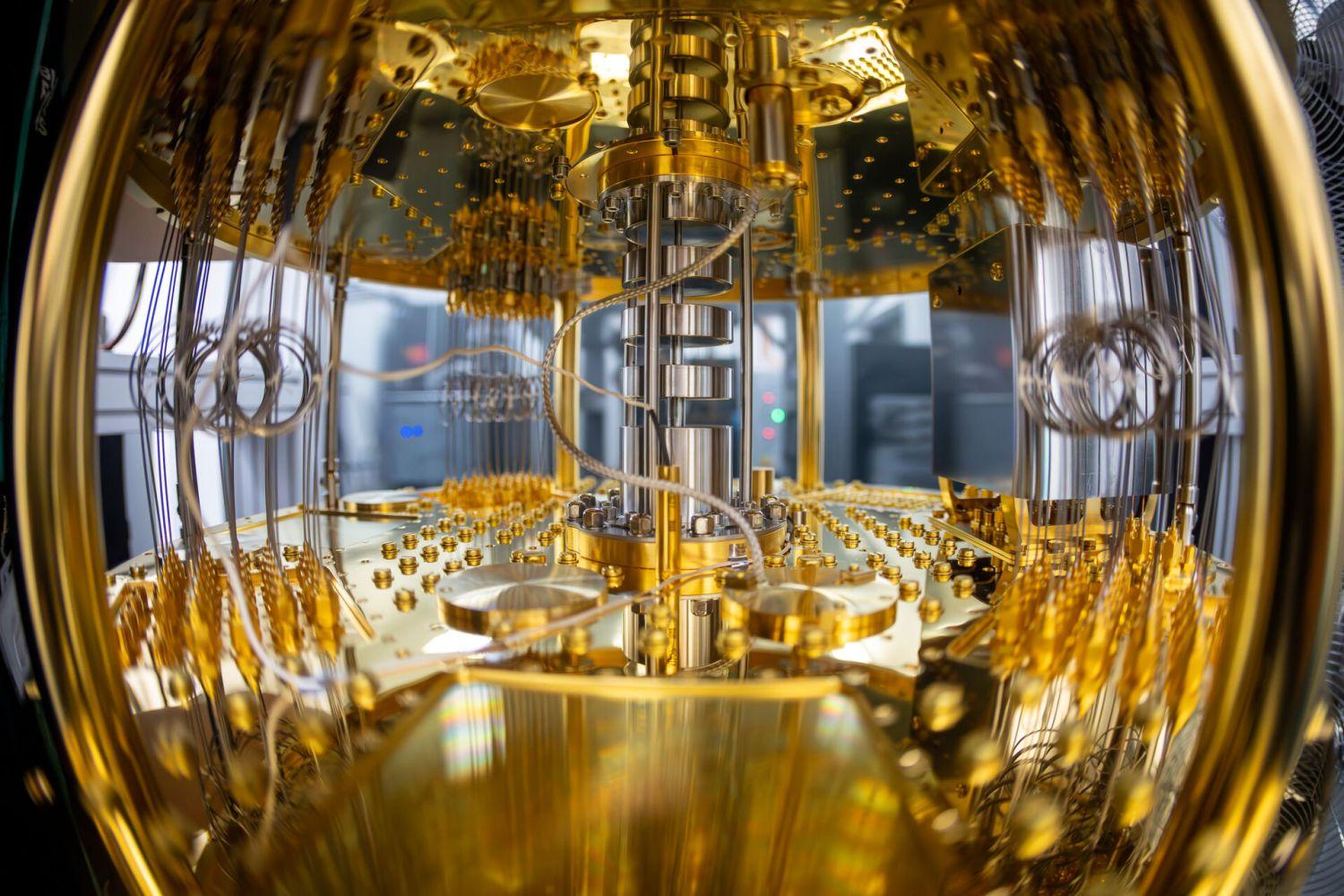
UCT Prague has joined IBM’s prestigious network of quantum centres
The University of Chemistry and Technology, Prague (UCT Prague) has become a member of the Quantum Innovation Center (QIC), part of IBM’s global research and innovation network. This gives UCT Prague researchers and students access to state-of-the-art quantum computers and the opportunity to utilize their computational power for research in chemistry, materials science, and other disciplines.
Quantum computers represent a promising tool for solving problems that are exceptionally challenging for classical computers. For UCT Prague, potential of quantum computers is particularly relevant in disciplines such as quantum chemistry; molecular modelling; the study of catalytic processes; and the development of new materials, batteries, and energy technologies.
Membership in QIC enables the remote use of IBM quantum computing resources and includes the testing of a user’s own algorithms and the acquisition of practical experience with quantum technologies whose application in R&D and industry continues to evolve.
“Equally important is the access our researchers and doctoral students now have to specialized workshops, training sessions, and practical assignments—including the opportunity to develop specialized educational modules for chemists,” Veronika Kramaříková, UCT Prague’s Vice-Rector for Development and Strategy who negotiated UCT’s entry into the IBM QIC, said.
In addition to the computing and educational infrastructure itself, membership also opens up new opportunities for collaboration with IBM experts and other international research teams. This will allow UCT Prague to bolster its involvement in interdisciplinary projects and to forge new partnerships with academic institutions and industrial enterprises, including entities operating in the defence sector.
“By participating in the future Czech quantum infrastructure, we are gaining the ability to contribute to the development of the Czech competence centre and, eventually, a ‘physical’ quantum computer located in the Czech Republic. This is a strategic opportunity, not an automatic entitlement resulting from membership,” Milan Pospíšil, UCT Prague Rector, added.
How do quantum computers work?
Instead of classical computing using bits (which can be 0 or 1), quantum computers use qubits, which can exist in a superposition of 0 and 1 simultaneously, allowing them to explore multiple possibilities at once. Together with other quantum phenomena—such as quantum entanglement—this enables the creation of computational processes that can be significantly more efficient than classical methods for certain types of tasks.
QIC members have dedicated remote access to the latest and most powerful quantum computers (currently, according to QIC, featuring 156 qubits).
The Quantum Innovation Center (QIC) is a consortium of Czech universities and research institutions. It provides its members with access to IBM’s most powerful quantum computers and software tools, including Qiskit. The Center fosters research, education, and industry collaboration in quantum technologies—ranging from cryptography to quantum communication and sensing all the way to quantum computing. It also trains experts who will transfer related technologies into practical applications, including those relevant to national security and resilience.
Photo: IT4Innovations