







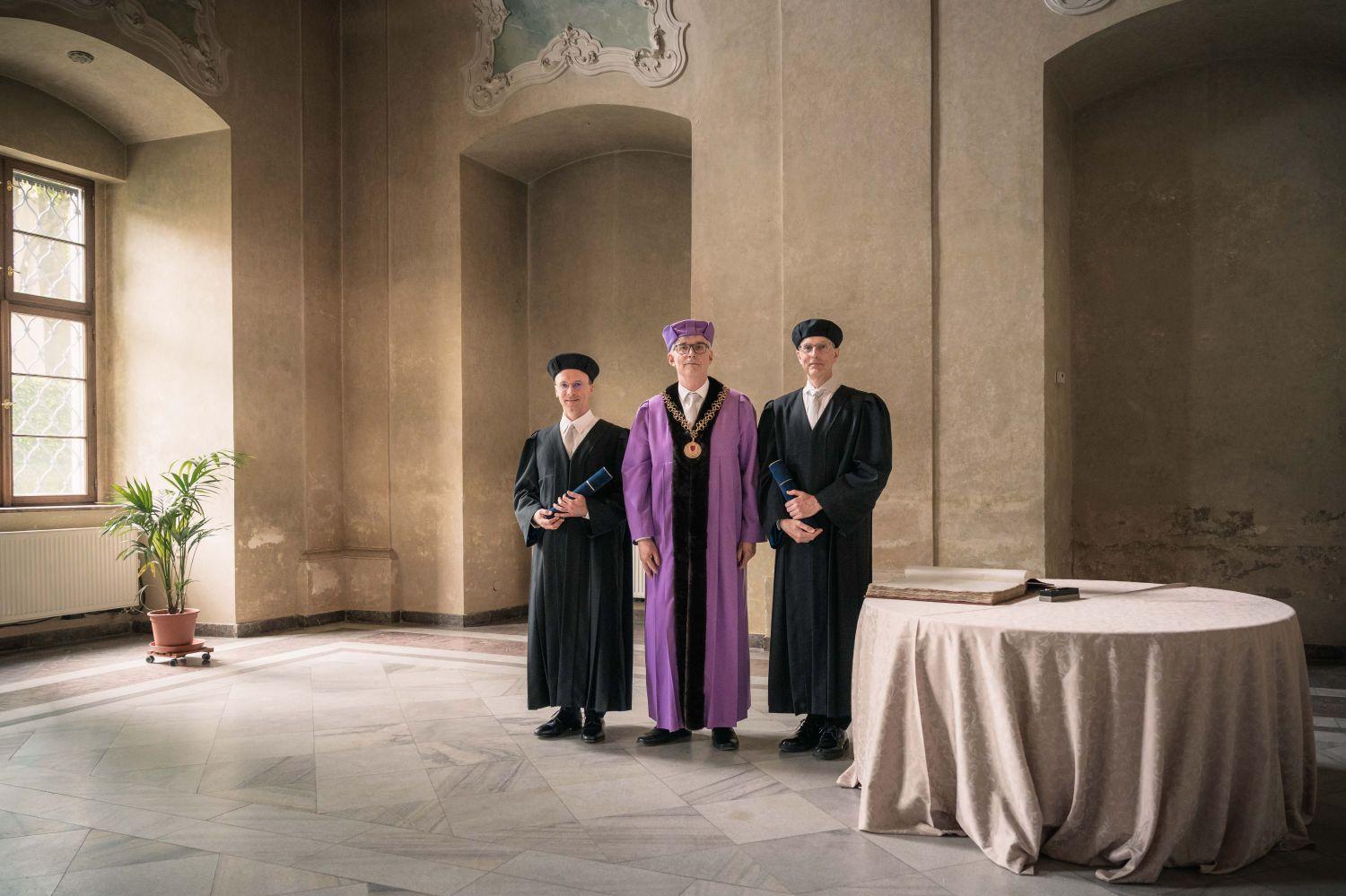
Two honorary doctorates, two world-class stories connected to UCT Prague
UCT Prague awarded honorary doctorates in May to Tomáš Cihlář, a globally recognized expert in virology and antiviral drug development, and to Professor Hans Jakob Wörner of ETH Zurich, a leading figure in ultrafast spectroscopy and attosecond science. The ceremony took place at the Strahov Monastery in Prague. In the following interviews, you will discover what the award means to both distinguished scientists, what their professional dreams are, what their typical workday looks like, and what fascinates them most about their research.
Tomáš Cihlář: Leading antiviral drug development in the USA
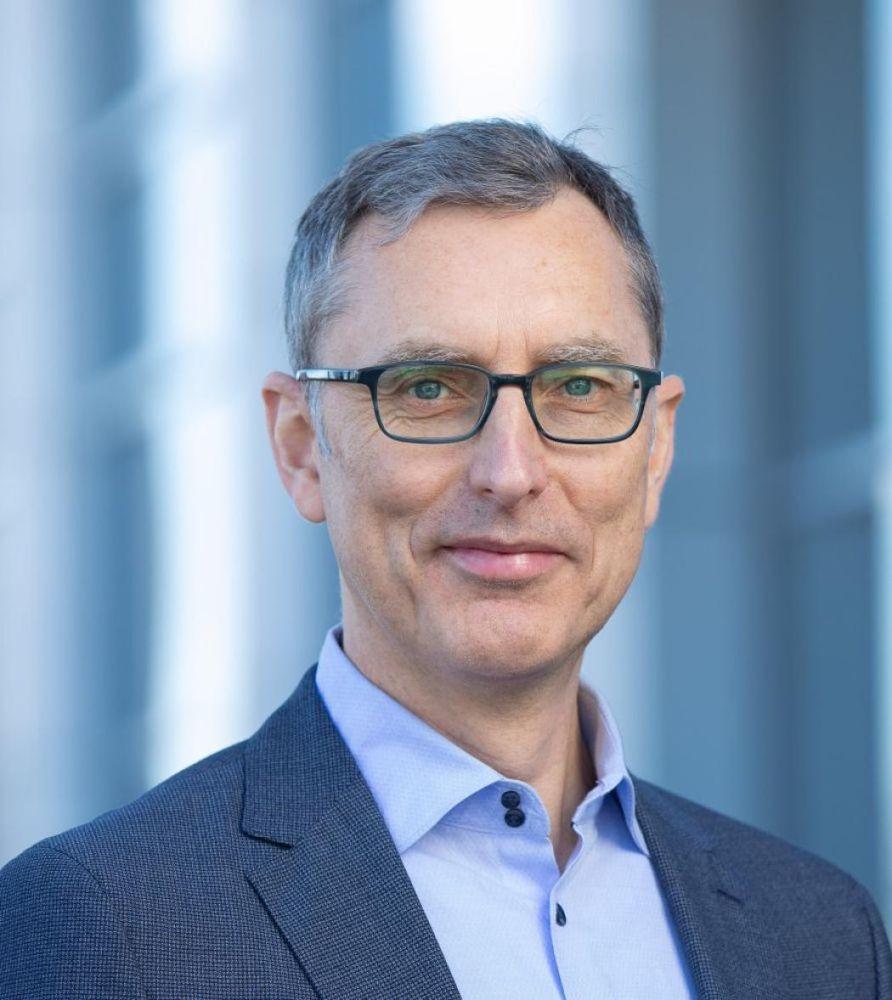
What does receiving an honorary doctorate from UCT Prague mean to you?
It is, of course, a great honor and a significant recognition of my work to date. The feeling is made even more meaningful by the fact that I studied here forty years ago (!), so it forms a kind of symbolic bridge spanning my entire career. At the same time, it is a somewhat bittersweet feeling, because I know this recognition would not have come without the many colleagues whose contributions were absolutely essential to everything we have achieved together.
When you think back to your undergraduate studies at UCT, what was the hardest part — and what did you enjoy most?
Without question, the hardest part was the inorganic chemistry laboratory in the first year. I remember with a sense of dread how my experiments simply did not work and how the expected colored powder failed to materialize in most cases. Then something clicked. Biochemistry with Professor Vodrážka was interesting, and the biochemistry lab work started to inspire me more — perhaps because the goal was to gain new information rather than to produce a material, which I was clearly not cut out for. On the other hand, synthetic chemistry is today an absolutely essential part of what we do at Gilead, and our medicinal chemists are behind every important discovery we have made.
When did you first realize that virology would be your calling?
I am not sure I ever categorized my work that way. I did what was needed to keep projects moving forward. When necessary, I was a biochemist, a pharmacologist, a toxicologist — and of course, often a virologist. Sometimes the task was to figure out why certain antivirals have side effects on the kidneys; other times, it meant testing compounds for inhibition of specific host functions or understanding the cellular metabolism of substances. What tied it all together was the end goal: the development of antiviral agents. So describing my specialization as virology is more of a practical simplification.
What led you to join Gilead Sciences after your doctorate and stay in the USA?
I was curious about how science was done in the United States, and I wanted to learn English. When an opportunity came through Professor Holý to join Gilead as a postdoctoral fellow, my family and I decided to go — even though I knew very little about how Gilead operated at the time. I'll admit that back then I had no idea I was heading to the very cradle of the global biotech industry. That only dawned on me after some time, and settling in the United States with the whole family was a long process. Without the enormous support of my wife, it never would have happened — that was the decisive factor.
What was the transition from a Czech university to working abroad like?
It took a while to overcome the language barrier. The science itself was not that different — the laboratories had better equipment and more money for research, so there was no issue with using pipettes, tubes, and other single-use materials, which made the work considerably easier. That difference no longer exists today.
What differences do you notice between research here and in the USA?
I am not sure it is my place to assess this complicated question, because what I know really well is only a specific slice of corporate pharmaceutical research. This sector is not yet as broadly developed in the Czech Republic and Central Europe as it is in the United States — though it could be. So an objective comparison is difficult. As for academic research, it is in its nature quite different from the corporate kind — not so much in technical terms, but in how it is organized and carried out. Academic environments often feature smaller, more independent teams with greater freedom to choose their focus. In the pharmaceutical industry, it is about broad collaboration among large, multidisciplinary teams that must be tightly integrated and that have a specific goal or problem to solve. There may be one difference between American and Czech university research worth noting: the degree to which work connects to practical application. Most American universities with strong medicinal research have very close ties to applied industrial research — partly because this industry is so well developed there, creating many opportunities. Americans are generally very open to collaboration; it is a natural approach to science for them. They see it as synergy, not competition.
How do you decide at Gilead which viral threats to focus research on?
There are many criteria, including above all considerations about where significant gaps in the treatment of viral diseases exist, how common and serious certain viral diseases are, what technological possibilities are available, and how difficult development and clinical testing of antivirals for a given infection might be. But also, for example, the likelihood that antivirals can meaningfully contribute to reducing or curing a particular disease. Some acute viral diseases progress very rapidly, and by the time symptoms appear there is not even enough time for diagnosis and the start of treatment. In those cases, prevention — primarily in the form of vaccines — takes precedence.
What does a typical workday look like for you?
It is mostly filled with various meetings and discussions with project teams, colleagues, Gilead leadership, or external partners. We plan, analyze results, and decide on next steps — where different projects are headed, what has the highest priority, and whether the most important projects have sufficient support and capacity. At any given moment, our virology unit is working on ten to fifteen projects simultaneously, and you have to find your way through that. It is largely about processing, interpreting, and connecting information, and the strategic decision-making tied to that. And then there are unexpected problems. It frequently happens that a particular approach does not work or a study does not deliver expected results, and then you have to change course.
Where do you see the greatest potential of Czech chemists and biochemists in global drug and antiviral research?
I think it lies in the originality of Czech science and the projects being pursued here. Among Czech scientists, there are a number of names of global significance — researchers who have found their unique niche, whether in structural biology, computational chemistry, physics, cancer research, or of course infectious diseases.
What do you see as the key to success for a biochemist?
In my field, it is teamwork and the determination to set off in a new direction. We do not talk much about individual achievements, but about what our teams have accomplished. Though that holds true in many fields.
What is the riskiest decision or step you have ever taken in your life?
I do not think I am someone who consciously takes many risks. Besides, risk is highly relative. Truly risky decisions are those that affect human lives. In the field of drug development, whose ultimate aim is to save lives, one could argue that the greatest risk is deciding not to pursue a risky project, even if it might yield an important new treatment. We thought along similar lines when we started working on the project that ultimately led to lenacapavir. We believed the greatest risk was not focusing on this new direction. There is of course the risk of lost investment if it fails — but that is precisely why you need a broader strategy and scope, so that at least some projects ultimately succeed. That is something the industry accounts for.
Do you give lectures? Do you collaborate with universities?
I lecture occasionally, mostly when an invitation comes in — at conferences, universities, various forums, scientific advisory boards. We collaborate with a number of universities, but it tends to focus on questions that help us understand the basic biology, epidemiology, and progression of the viral diseases we target. University labs may have unique models or specialized facilities for working with highly pathogenic viruses. For example, projects involving Ebola or other dangerous viruses are carried out almost exclusively in collaboration with universities or government institutions that have the appropriate accredited laboratories and other necessary infrastructure that we do not have available at Gilead.
How do you relax outside the lab and office?
The lab is no longer part of my life, but the office very much is. It involves a lot of sitting and little movement, so you have to make sure you get moving outside of work. I run, ski, tend to my garden, and spend time in nature.
What is your next big goal or dream?
To keep working as long as it makes sense to me, and to learn how to use artificial intelligence effectively in our work. But above all, to pass on as much experience as possible — because virologists and antivirals will continue to be needed, despite the fact that interest from many companies and investors in this area has dropped sharply since the pandemic (Gilead, fortunately, is not among them). There are of course many unsolved problems — for example, how to achieve a complete cure for some of the most widespread chronic viral infections, such as HIV and viral hepatitis B. These are enormously complex challenges. If our generation cannot solve them entirely, I at least hope we will build a solid foundation, so that it can eventually be done. That would be a remarkable breakthrough and a resolution of one of the most difficult problems in modern drug development.
H. J. Wörner: Attosecond science — observing the fastest events in nature
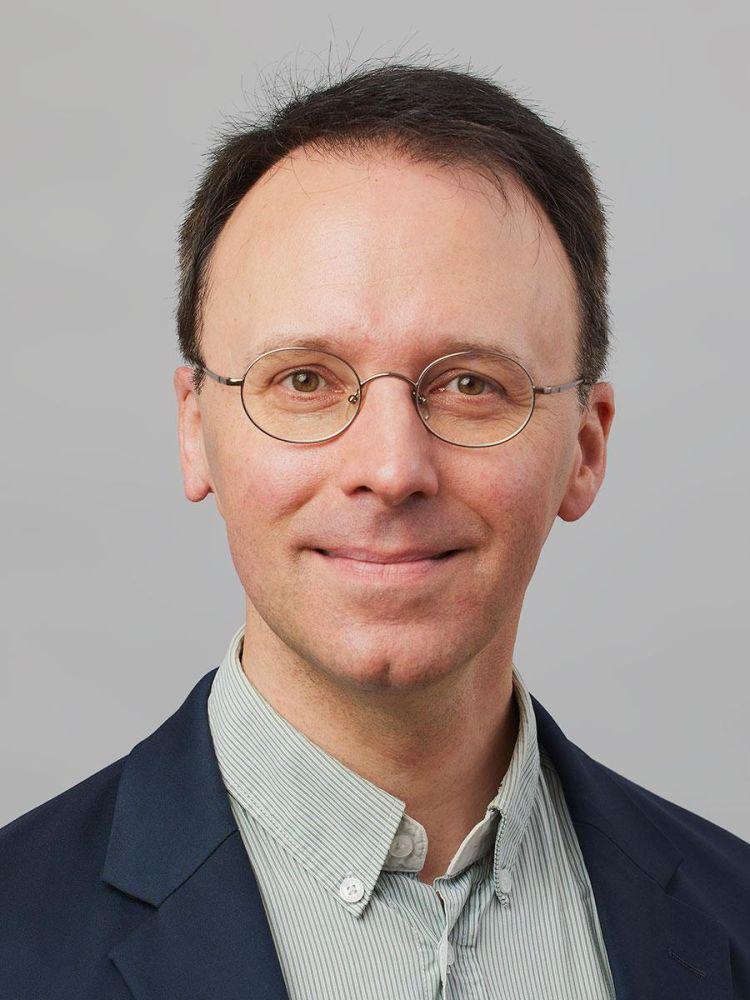
What does receiving an honorary doctorate from UCT Prague mean to you?
Receiving an honorary doctorate from UCT Prague is a profound honor and I am sincerely grateful to the Scientific Board for this recognition. I regard it above all as a collective achievement, reflecting the creativity, hard work and dedication of my co-workers, collaborators, mentors, colleagues — and not least, the support of my family.
What fascinates you about attosecond processes?
They are the fastest processes that mankind can currently control, which has become possible through the incredible progress that laser science has made over the last sixty years. Attoseconds are the natural time scale on which electrons move in matter — therefore the fastest time scales in chemical and biological processes and possibly the ultimate time scale for information processing. Observing and controlling these dynamics in real time allows us to follow the motion of electrons as it unfolds, before nuclear motion sets in, and to access the very first steps that govern chemical reactivity and charge redistribution. This opens a new way of understanding and ultimately steering matter at its most elementary level.
Have you ever considered working in fields other than physical chemistry?
In high school I was fascinated by physics — first cosmology, then particle physics, then quantum mechanics. As a student, I was first drawn toward organic chemistry because I admired the ability to make complex molecules. But then I missed the mathematical foundations and turned to physical chemistry, which keeps fascinating me through its ability to describe very complex systems with simple principles.
You collaborate with Petr Slavíček's research group. What makes their scientific expertise unique in your view? And what do you think makes your own approach distinctive?
Petr Slavíček is a world-leading expert on the simulation of ultrafast processes of molecules in complex environments. His approach is unique in combining high-level electronic structure theory with non-adiabatic dynamics simulations and the prediction of spectroscopic observables. My group and I have learnt an enormous amount through collaborations with Petr and his group — for example on the formation dynamics of the solvated electron, intermolecular Coulomb decay in liquid water, or the photoisomerization of stilbene.
The distinctive contributions of my group are the development of attosecond spectroscopies in the liquid phase: photoelectron spectroscopy, high-harmonic spectroscopy and soft-X-ray absorption spectroscopy.
Do you have any scientific dream? And if not, what drives you forward in your work and life?
My dream is to advance attosecond spectroscopy to the point where it can be applied to complex molecules in liquid and heterogeneous systems, to use it to understand their dynamics at the most fundamental level, and to use this knowledge to design better photocatalysts and functional materials. What drives me forward is the passion and support of my co-workers and colleagues, and the love of my family — my wife and three children.
ETH Zurich is a globally renowned university of great prestige. What, in your opinion, is the source of its special appeal?
There are several contributions to its appeal: the fantastic people who work and study there, the freedom in research, the focus on fundamental research, the outstanding infrastructure, and the generous research funding.
On the other hand, is there anything ETH has been struggling with for a long time and still finds difficult to solve?
ETH is facing rising student numbers and shrinking budgets — both from the federal government and from funding agencies. Increasing expectations from society and political pressures add to the challenge.
How well known is UCT Prague in Switzerland or internationally, in the academic circles you move in?
UCT Prague is well known in Switzerland, particularly at ETH Zürich, at chemistry departments and in the chemical industry, as one of Europe's leading specialized institutions in chemical sciences, delivering high-quality research and rigorous training. In my academic circles, it has an excellent reputation for highly original and innovative research, notably in fundamental physical chemistry.
During your postdoc, you worked with Prof. Paul Corkum. How do you remember that collaboration?
Paul Corkum is a scientific genius and a founder of our field of attosecond science. It was a true privilege to spend three years in his group and learn the foundations of attosecond spectroscopy from him, David Villeneuve and Misha Ivanov. I had the chance of being involved in a relatively large number of experiments, which really fascinated me and convinced me to stay in this field. Most impressive was Paul's ability to quickly understand and then explain new experimental results.
And how do you recall running together with Vít Svoboda from UCT Prague during your shared breaks?
I knew that Vít was an outstanding runner, but I chose to challenge myself from time to time by running with him. I always had a hard time keeping up with him, but he would kindly pace himself to give me a chance to follow. After such runs, I was always exhausted and needed a good meal — whereas he would return to his computer and eat a cucumber.
Switzerland is famous, among other things, for its beautiful mountains. Have you fallen under their spell, or are you more the kind of scientist who spends sixteen hours a day in the laboratory?
I am in love with mountains in general and with Swiss mountains in particular. I go to the mountains whenever possible — with my family, with my research group and on conferences. I am a passionate skier, I love hiking, and I share both interests with my family and group members. As a research group, we go on two-day winter sport trips every year. In summer, we regularly go on group hikes to the mountains.