







Interview with re-elected Deans – Professors Zámostný and Jeníček
Professors Petr Zámostný and Pavel Jeníček defended their positions in the elections as Deans of the Faculty of Chemical Technology and the Faculty of Environmental Technology, respectively, at the end of 2025. They had no opponents and received clear mandates from voters in implementing their faculty strategies. What have they achieved in the past four years and what promises are they carrying over into the coming years? What has surprised them in their positions and what changes are they planning? And what worries them most about faculty management?
Petr Zámostný: Our faculty is strong. We must be able to reach for the stars
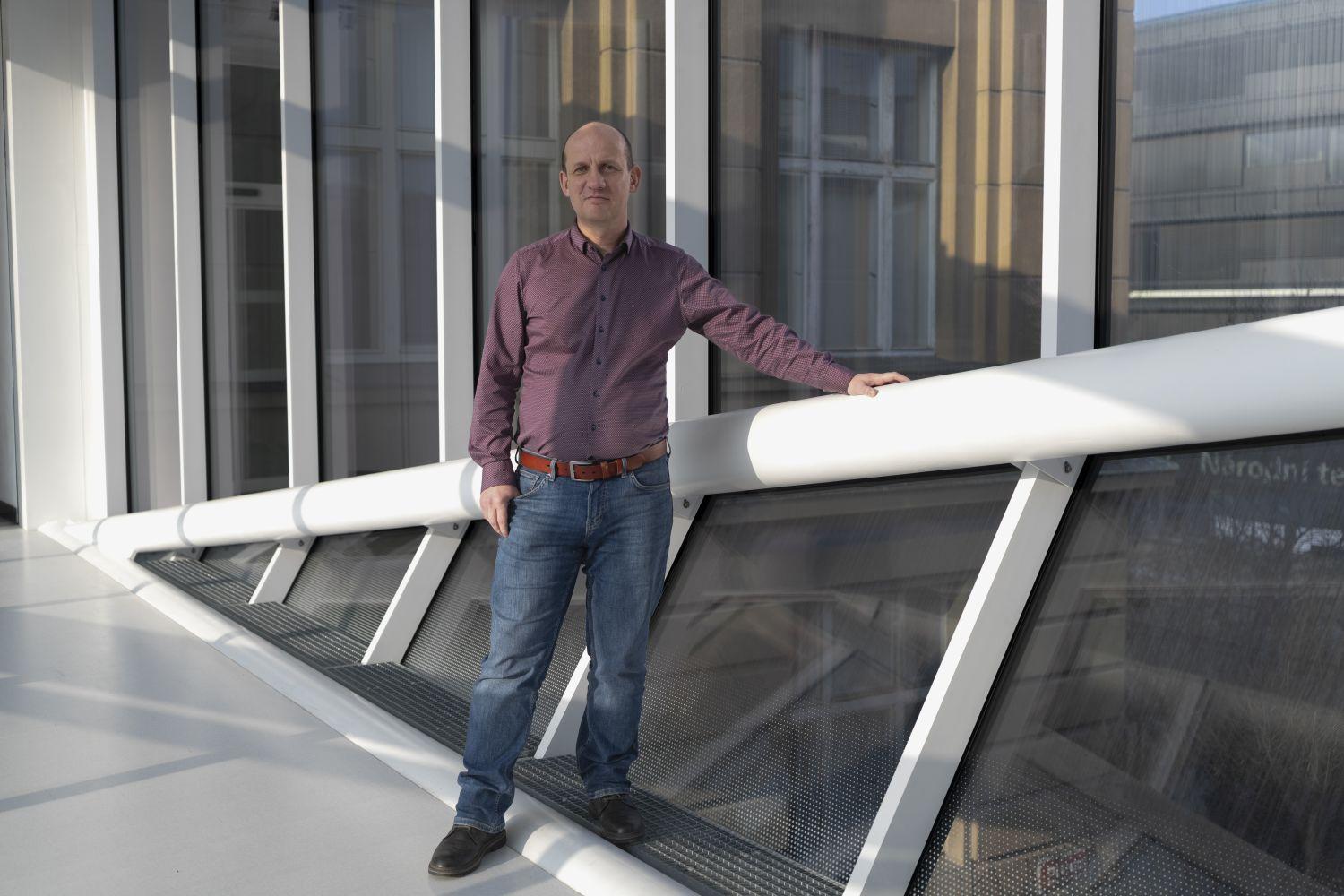
What do you consider the main successes during your first term as Dean of FCT to be?
I consider the most important thing was to maintain faculty stability in a period that was not entirely easy, even though at first glance, it might have seemed as if it were experiencing a continuous boom. UCT Prague visions changed with the Rector transition, there were relatively dramatic changes in the structure of study programmes, and the new national concept for doctoral studies was being addressed. In addition, in the first half of the last term of office, the large Nanorobots project ended, resulting in significant personnel changes. Despite this, the faculty maintained its high scientific output, spread at least somewhat evenly across various specialities, and we managed to stabilize and even increase interest in our Bachelor programmes. Industrial cooperation has also been strengthened: revenues from such activities increased from approximately 18 to 22 million CZK/year, which seems “small” with respect to the overall budget, but which represents funding for project participation. We are establishing our first spin-offs. And last but not least, promotion of the faculty has significantly improved. Today we are more visible and we are better able to communicate what the faculty actually does and what its results are.
Overall, the faculty has proven to be strong as a whole and resilient to relatively strong destabilizing impulses from outside. All of this resulted in an extremely successful evaluation by the International Evaluation Panel at the end of the term.
What, on the other hand, did not go so well?
Personally, I see my biggest failure as not being able to limit, let alone reduce, the administrative and managerial burden on the faculty, departments, and individual employees. Perhaps this is related to the fact that we are relatively successful in research and teaching, and therefore, we have relatively less time and energy for managing the administrative and managerial sides of faculty operations. Unfortunately, the administrative burden is generally high at the UCT Prague and the support from the university headquarters’ offices is not always uniform or of sufficient quality. Faculties are often drawn into competence disputes among respective Rectorate units, or conversely, some newly established Rectorate units assign tasks to individual faculties rather than reducing burdens. These are things that cost the faculty a lot of energy and time and there is not a simple solution that a single Dean’s office could come with. Of course, we are not able to solve on our own the lack of space for further development of the faculty and its departments. I would not call this a failure of my first term. It is rather a limitation that has been historically prescribed, and overall improvement is a long-term process, even under the unrealistic assumption of sufficient funds, let alone in the context of the real situation of how universities are institutionally funded. However, in my opinion, all of us at UCT Prague are all in this together.
What surprised you in your role as Dean?
How crucial communication is. It is not so much about major strategic decisions, but about the daily flow of information necessary for managing competencies and setting up processes. Management of the faculty is quite complex and comprehensive, and even though I had already been the head of my department for some time before assuming the role of Dean, I was surprised by how many different agendas have to be addressed just to maintain the status quo, let alone in a context of fundamental change in external conditions.
What are your priorities for your next term?
My basic philosophy remains the same as the title of an article about me four years ago: I am not a revolutionary. I want to preserve what works and gradually improve the areas where we have margins for doing so. My priority is maintaining the faculty’s high scientific and technological performance and, at the same time, focusing more on promoting master’s programmes as well as master’s instruction, which is gradually becoming a strategic focus. It has so far been taken for granted that master’s programmes build on in-house Bachelor studies and that they possibly precede respective doctoral studies. In the current environment, we have to get used to the situation where a significant percentage of the students enrolled in the master’s programmes no longer comes from the undergraduates of a related Bachelor programme at UCT Prague. Rather, master’s students may come from elsewhere, perhaps even from abroad, and continuing with a doctorate in the same field may no longer be taken for granted. We have to open ourselves up more to these new possibilities.
When it comes to research and other creative activities, I am not just thinking about the next four-year term. The faculty must be able to reach for the stars. That is, goals that will take more than four years to reach must be formulated, even if we take steps towards achieving them gradually and realistically. From this perspective, it makes sense to support large grant-funded projects with a relatively narrow focus that have the potential to include other activities and move us forward. I want to place great emphasis on systematic promoting and building the FCT brand so that the external image of the faculty corresponds to the real significance of its outcomes. Likewise, I want to emphasize meaningful internationalization: targeted and economically sustainable internationalization instead of embracing it just declaratively. Last but not least, I consider the personnel stability and career development of early career and more advanced researchers to be crucial, with an emphasis on understanding that the questions “what the faculty can do for researchers” and “what a researcher can do for the faculty” are two inseparable things that must remain in balance. In this regard, too, as an employee of the faculty, I want to set a personal example.
Are you planning any major innovations during this term in office?
I do not want to promise radical changes but rather evolutionary development: stabilization and evaluation of restructured study programmes and gradual adaptation to a situation where funding for research from national programmes may be reduced. This will require greater flexibility and thoughtful use of the faculty’s human and financial resources. However, I initiated a more significant change at the end of my last term in office: namely, by expanding the number of colleagues involved in faculty management and optimizing task distribution among the Vice-Deans. I consider this to be one of the few tangible ways for ensuring high-quality faculty management in the long term in an environment where skilled managers are often heavily burdened with their core research duties or the departmental management. In my opinion, by reducing and more clearly defining the Vice-Deans’ agendas, we can not only to stabilize how the faculty is managed but also systematically prepare colleagues for future management roles.
What would you like the faculty to look like when you hand over the position of Dean?
I would like to hand over a faculty that will be scientifically strong, confident in its instructional abilities, and staffed in a stable manner. A faculty with clearly defined roles and responsibilities, functional administrative support, with open cooperation channels yet able to say “no” to disadvantageous or one-sided offers. Also, a faculty with a clear identity and a good reputation not only within UCT Prague, but also externally. A faculty whose scholars will not be perceived just for extensive lists of publications and high h-indices, but also in terms of professional and moral authority.
Is there anything you would like to say to your colleagues and students?
The Faculty of Chemical Technology has exceptionally strong human resources potential with a broad base of quality academic, technical, and administrative staff. Not just a few stars and top research groups. My biggest ambition is not to manage the faculty from above, but to create conditions for good things to happen naturally, bottom-up. If this is how my efforts are perceived, I consider it my greatest success in faculty management.
I would like to encourage colleagues to become more involved in internal communication and public promotion of the faculty. It turns out that this is where the faculty has great potential, but at the same time, it needs clear coordination and a longer-term concept. I am therefore open to applications from the academic community for the role of Vice-Dean in charge of promotion, popularization, and communication. This role should include building the FCT brand; improving communication between faculty management, departments, and students; and actively solving problems that often arise due to insufficient information flows. Without filling this position, our faculty’s management team will not be complete. I would therefore be pleased if colleagues who have the desire and capacity for taking on this role come forward, from the grassroots level based on real motivation and competence.
Pavel Jeníček: Joint teaching with top universities increases the quality of our instruction
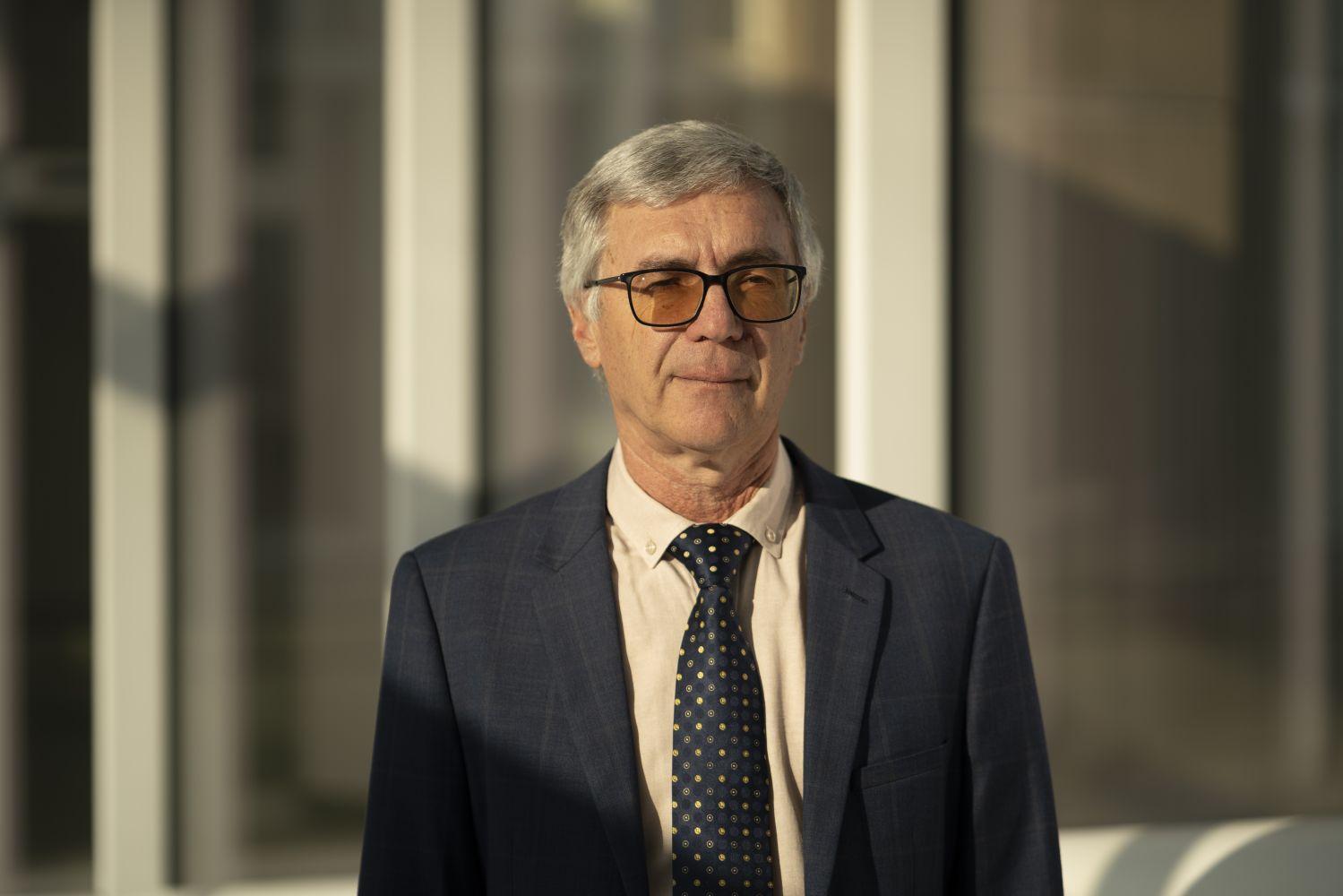
Looking back, how would you objectively describe your achievements in your previous term?
First of all, I would like to emphasize that the successes of my previous term are not only related to my activities, but that they represent, above all, the excellent work performed by my faculty colleagues: Vice-Deans, department heads, Dean’s Office employees, and many others. From my point of view, the merger of two departments focused on fuels into one department has resulted in one of the most efficient university research units, which can be considered a significant success. The second international master’s programme at the faculty, the International Master in Technology and Management for Circular Economy (IMATEC), which has commenced, supported by Erasmus Mundus, is also an indisputable success and it is significantly contributing to stopping the decline in the number of students at our faculty. In my opinion, joint teaching with top European universities increases the quality of our instruction as well. The faculty’s 70th founding anniversary celebrations were also very well received.
What, on the other hand, did not work out so well, and why?
I still see great reluctance by the younger generation in getting involved in faculty management, which was one of the main pillars of my first-term Dean’s strategy. I counted on an increase in the number of younger colleagues promoted in tenure ranks, which did not happen. Of course, I am aware that this is a long-term goal extending beyond one electoral term, but it still feels like an unfulfilled promise, nonetheless. It’s an urgent task to engage capable and healthily ambitious younger colleagues in our departments and help them in their professional growth. This remains one of the priorities for me and departmental heads in this term.
What are the other priorities for this term?
My main priorities include maintaining a friendly and collegial atmosphere at the faculty, which is essential for quality cooperation, open communications, and long-term employee/student motivation. Good interpersonal relationships create a stable environment in which professional and organizational challenges can be effectively addressed.
Another important area is streamlining instruction. The goal is not to reduce teaching, but rather to clarify its structure, better coordinate between subjects, eliminate unnecessary duplications, and increase the use of modern methods using AI capabilities. This will lead to more effective teaching and, at the same time, free up time for instructors to engage in research and organizational activities.
I also consider it essential to optimize workload across the faculty. We must systematically spread responsibilities among more people, involve younger colleagues more, and achieve a level of workload that is sustainable over the long term.
Another big priority is the targeted creation of conditions for the growth of new leaders capable of managing projects and teams. This will strengthen the faculty’s R&D profile and make it more stable and competitive.
Is there anything that has surprised you or caught you off guard in your role as Dean?
The answer is that a person managing a UCT Prague department or faculty should not be surprised or taken aback by anything. But this is, of course, not true. The development of higher education is very dynamic and is increasingly influenced by external forces. If I were to give at least one specific example, it would mainly be the level of difficulty and the very limited room for manoeuvre as Dean in trying to reduce or at least alleviate the ever-increasing bureaucratic burden on colleagues. I was surprised at how few real tools I had at my disposal in effectively intervening against the administrative requirements that are gradually piling up in the workplace and increasingly burdening academic and professional performances.
How would you like the faculty to function when you hand over the position of Dean in four years?
At the end of my term, I would like to see FET as a stable, self-confident and modern faculty perceived as respected and trustworthy. A faculty whose R&D outcomes, educational activities, and social contributions have a real and long-term impact at the national and international levels. I understand “impact” here not only in the sense of publication outputs and scientific indicators, but above all, as the ability to co-determine the direction of development of our field, to be a sought-after partner for cooperative activities, to attract high-quality students and employees, and to be a natural authority in professional discussions and strategic initiatives.