





UCT Prague Awards Honorary Doctorates to Tomáš Cihlář and Hans Jakob Wörner
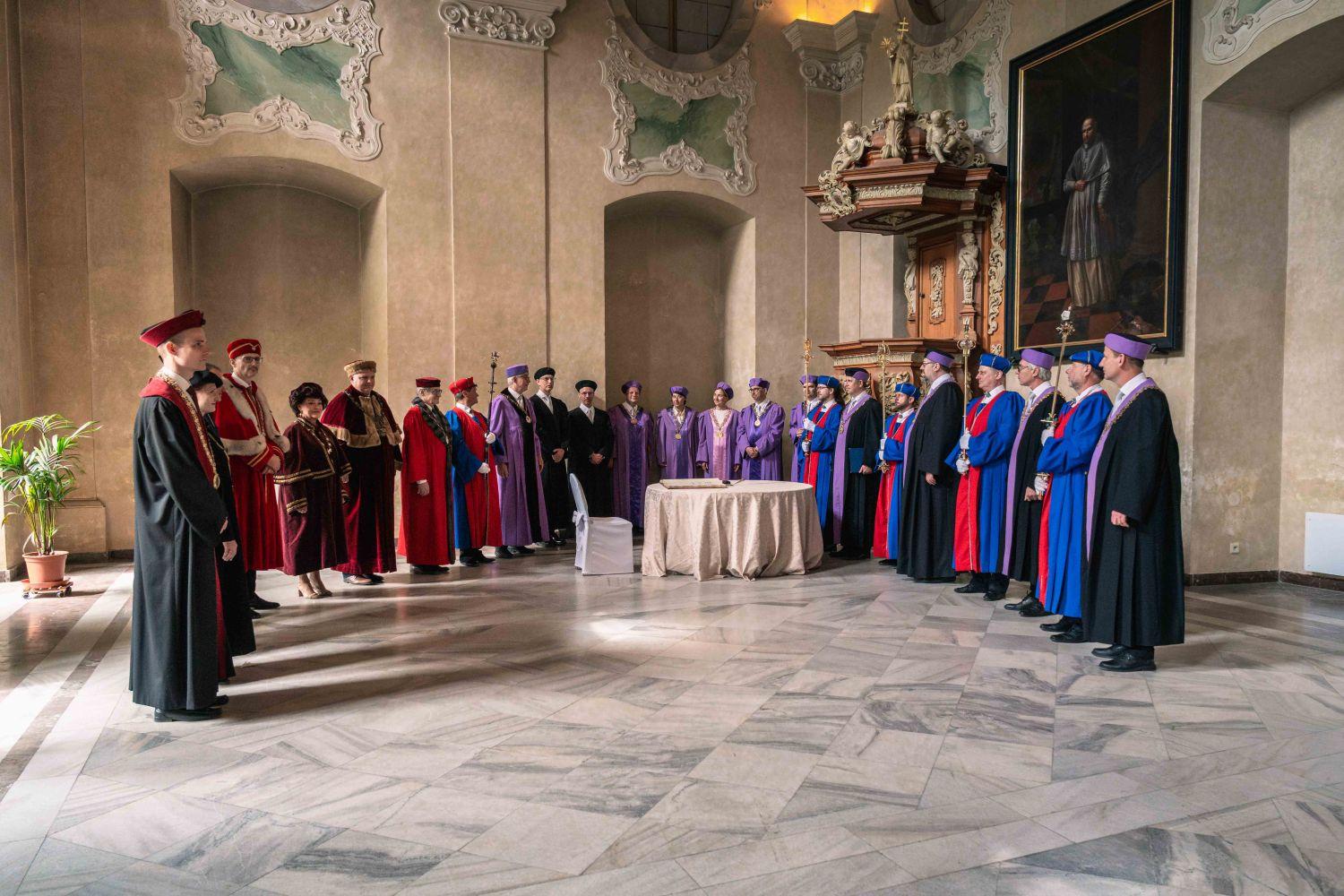
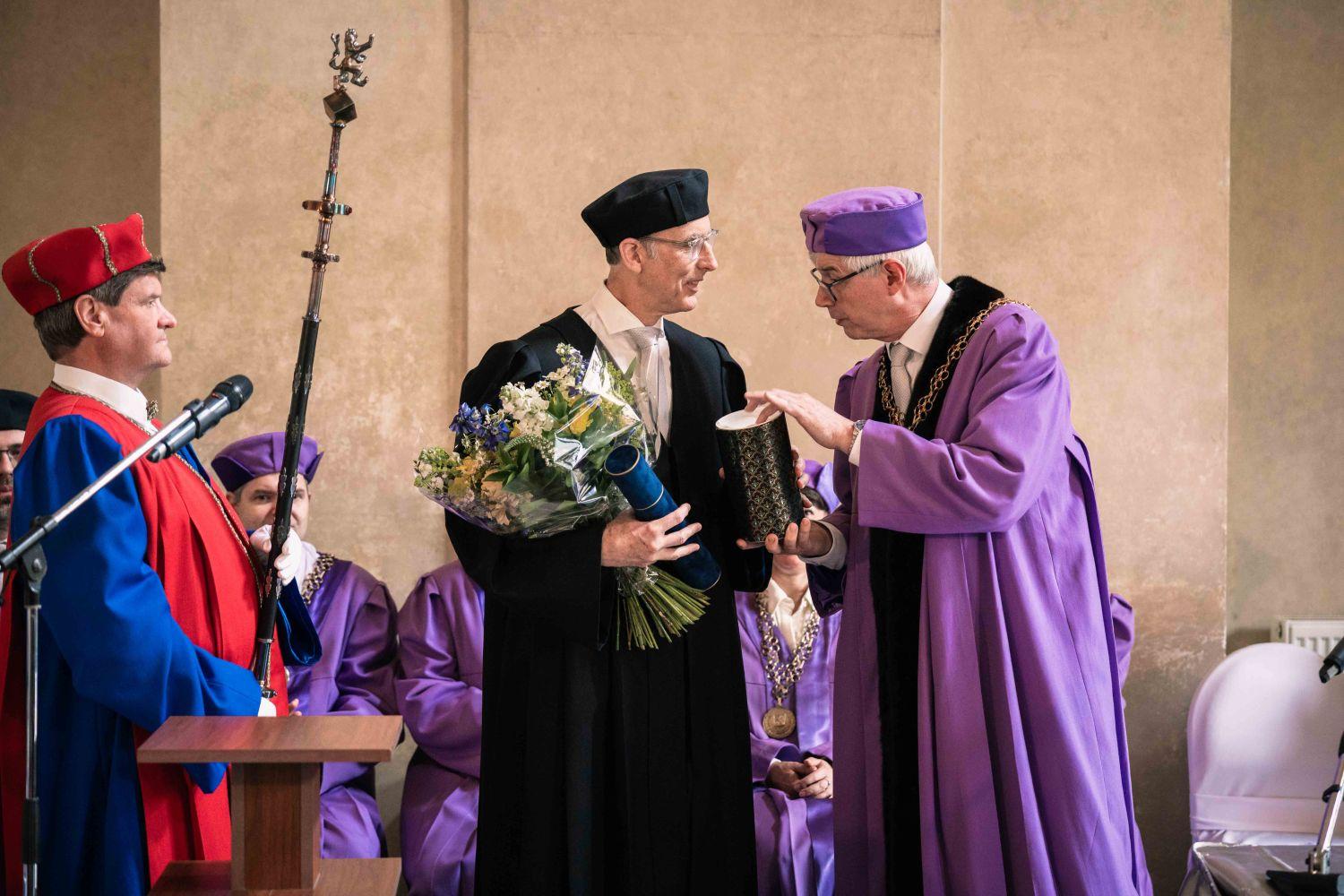
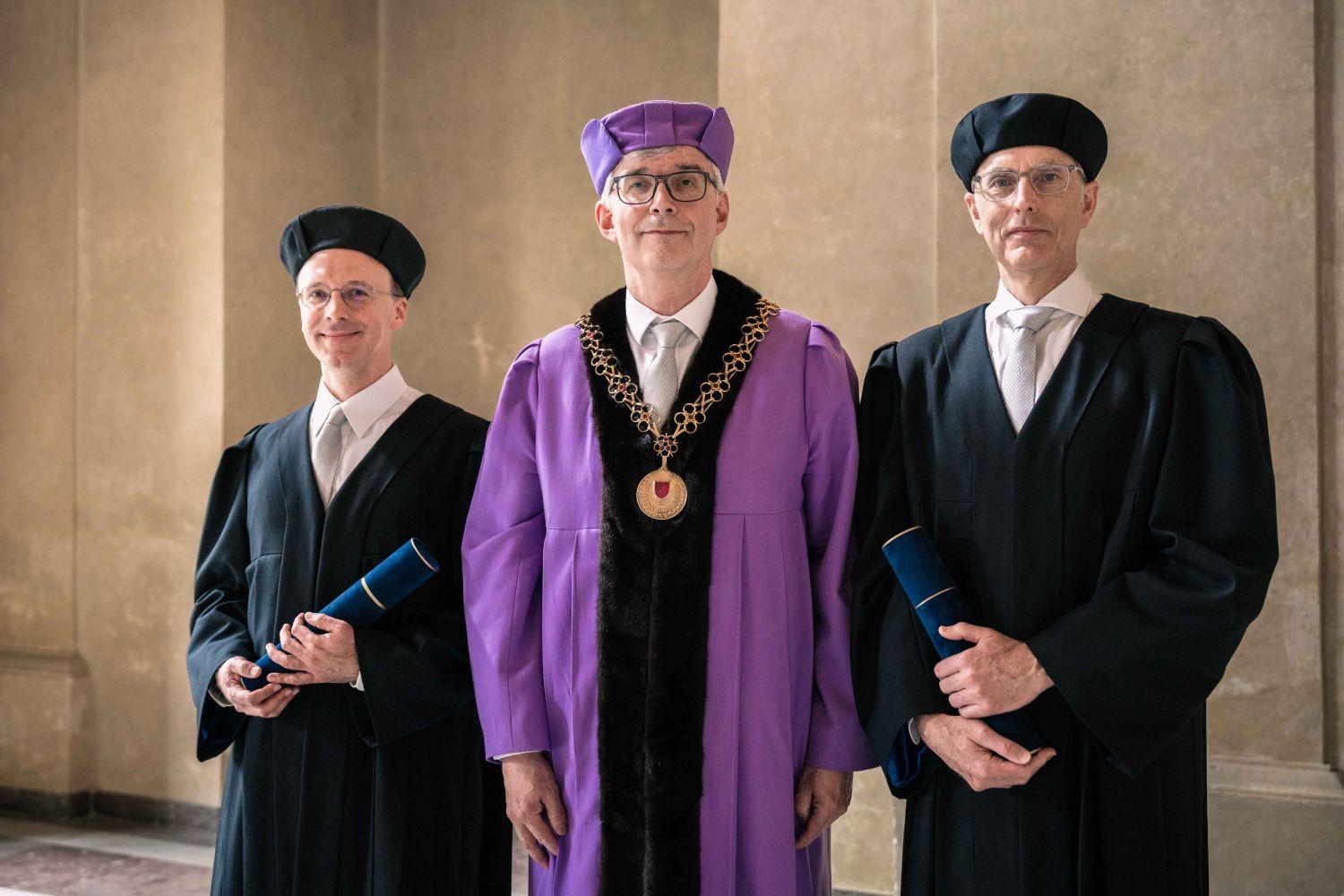
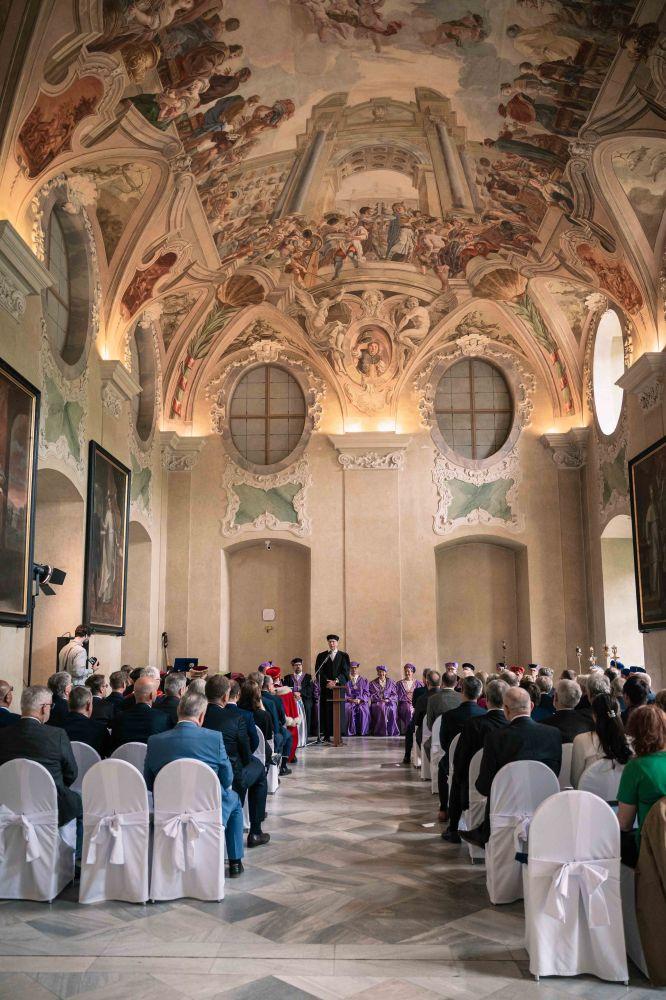
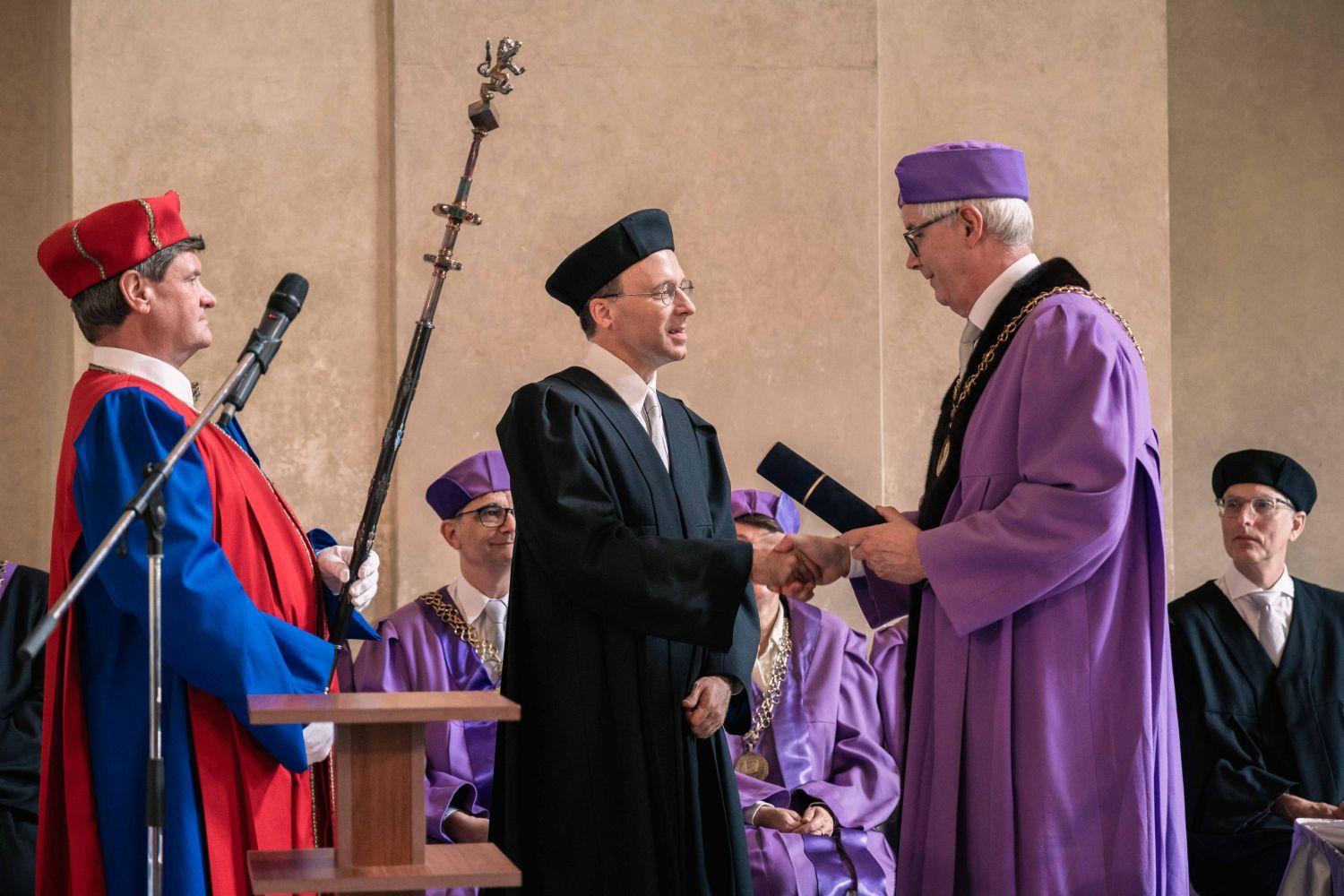
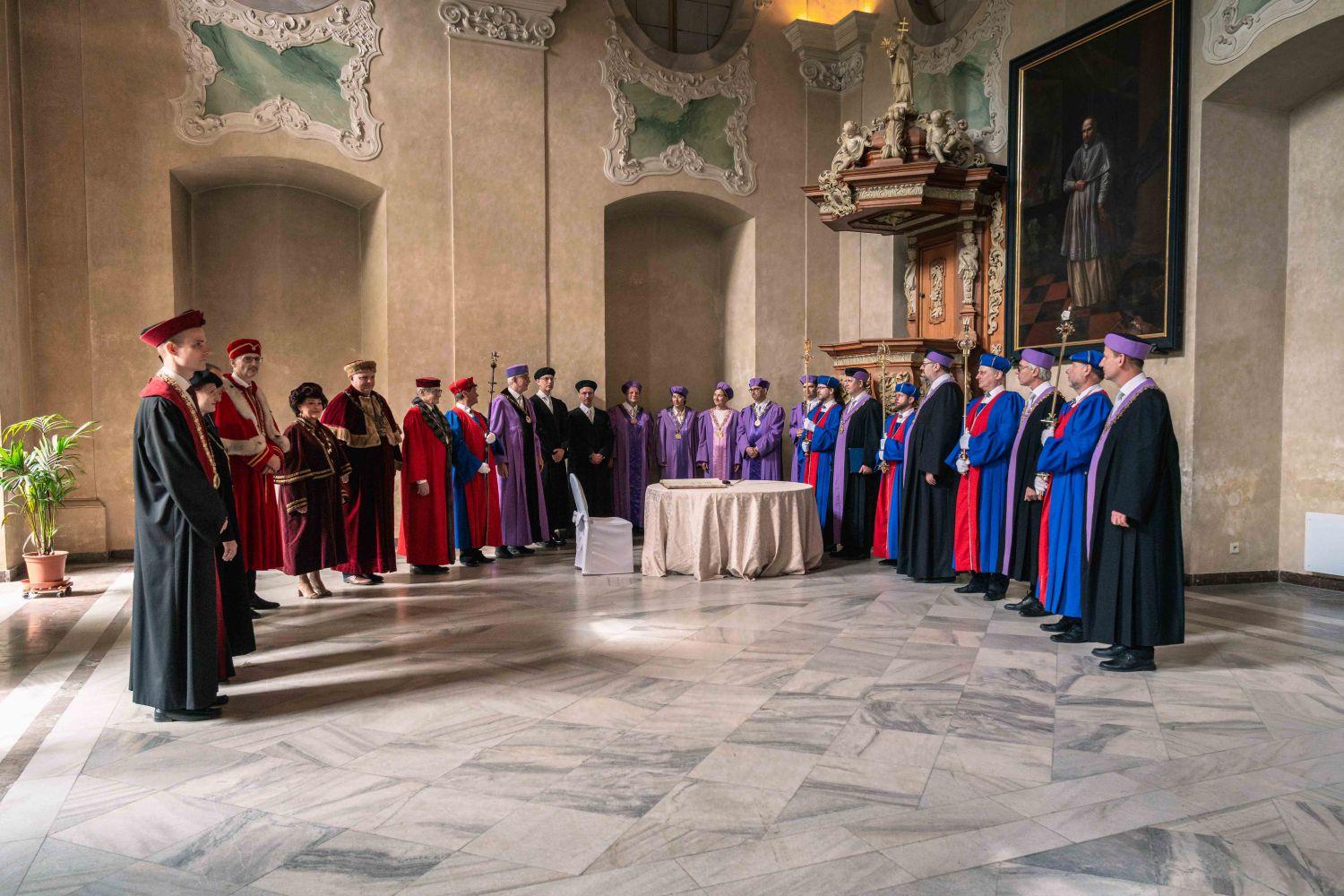
Prague, 4 May 2026 – The University of Chemistry and Technology, Prague (UCT Prague) has awarded the honorary degree of Doctor Honoris Causa (h.c.) to Tomáš Cihlář, a world-renowned expert in virology, and Hans Jakob Wörner, a professor at ETH Zurich and a leading figure in ultrafast spectroscopy and attosecond science. The ceremony took place on 4 May 2026 at the Strahov Monastery in Prague.
The honorary doctorate is among the most significant honours a university can bestow; UCT Prague confers honorary doctorates to individuals whose work has fundamentally contributed to the development of the fields that form its scientific/educational core. In the case of Tomáš Cihlář, the award acknowledges his extraordinary contribution to the research and development of new antivirals; for Hans Jakob Wörner, it honours his breakthrough results in physical chemistry, ultrafast spectroscopy, and the study of electronic processes on attosecond timescales.
“By granting these honorary doctorates, we have recognized respected global research and science figures. The work of Tomáš Cihlář, an alumnus of our university, has a direct impact on millions of human lives. Hans Jakob Wörner, meanwhile, is pushing the boundaries of what we can observe and measure in chemical processes—down to the movement of electrons across timescales that are almost beyond human imagination,” says Milan Pospíšil, UCT Prague Rector.
UCT Prague—based on the Dejvice campus and in Holešovice—bestows honorary doctorates very rarely (unlike many other universities). Over the past 20 years, only seven scientists have received this recognition, including Professors Antonín Holý and Václav Pačes and well as the French Nobel laureate Jean-Marie Lehn.
“This is a significant recognition of my life’s work, made all the more special by the fact that I studied at UCT Prague forty years ago, and so I see it rather as a symbolic bridge spanning my entire career. At the same time, I feel somewhat hesitant, since I know this would not have been possible without the contributions from my many colleagues, all of whom made essential contributions to our results,” says Tomáš Cihlář.
“Receiving an honorary doctorate from UCT Prague is a true honour for me. I am sincerely grateful to the Scientific Board for this recognition. Above all, I feel that this recognition reflects the collective creativity, hard work, and dedication of my collaborators, partners, mentors, and colleagues—and, last but not least, the support of my family,” says Hans J. Wörner. “UCT Prague is well-known at Swiss universities. Within my academic circles, it enjoys an excellent reputation for highly original and innovative research, particularly in fundamental physical chemistry,” he adds.
Despite their numerous career achievements, both honourees continue to harbour ambitious scientific dreams.
“There are a whole range of unresolved, complicated problems—for example, a way to completely cure certain widespread chronic viral infections such as HIV or Hepatitis B. If our generation does not manage to solve this entirely, I at least hope that we will build a solid bridgehead toward that goal,” says Tomáš Cihlář.
“I would like to advance attosecond spectroscopy so that it can be applied to complex molecules in liquid and heterogeneous systems; my goal is to understand their dynamics at the most fundamental level and use these insights to design superior photocatalysts and functional materials,” states Professor Wörner.
Tomáš Cihlář: from studies at UCT Prague to the development of antivirals with global impact
Tomáš Cihlář graduated from UCT Prague’s (then) Fermentation Chemistry and Bioengineering Department (today’s Department of Biotechnology), where he also earned his graduate degree (candidatus scientiarum) in biochemistry. He completed his doctoral dissertation at the Institute of Organic Chemistry and Biochemistry (IOCB) of the Czech Academy of Sciences. It was during his postgraduate studies that he first became deeply involved in antiviral research, the area to which he has dedicated his entire professional career.
For more than thirty years, he has been with Gilead Sciences, currently serving as Senior Vice President of Research, Virology. Together with his colleagues, he focuses on the research of compounds for the treatment of viral diseases, particularly HIV, Hepatitis B, and respiratory infections. Among the most prominent results of his scientific work is his contribution to the development of antivirals with significant medical impact, including remdesivir and lenacapavir, also known by their brand names Veklury and Sunlenca.
Lenacapavir is considered a major milestone in the treatment and prevention of HIV. The work of Tomáš Cihlář and his colleague, Wesley Sundquist, in this field has garnered extraordinary international attention; Time magazine highlighted the two as being among the 100 most influential people of 2025 in the “Pioneers” category.
At the same time, Dr. Cihlář has long maintained strong ties to the Czech scientific community—specifically with UCT Prague and IOCB. In 2025, through Gilead, he participated in developing the scientific program and supporting the international 13th International Retroviral Symposium, which was organized by UCT Prague.
Hans Jakob Wörner: chemistry observed in less than a trillionth of a second
Professor Hans Jakob Wörner serves as a Full Professor of Physical Chemistry at ETH Zurich. He is one of the world’s leading figures in ultrafast spectroscopy and attosecond science—a field that makes it possible to observe electronic processes in molecules across extremely short time intervals. An attosecond is equal to 10⁻¹⁸ seconds and is the timescale upon which the fastest processes determining chemical reactions occur.
The research conducted by Professor Wörner’s group demonstrates how electron movements influence chemical processes and how these phenomena can be experimentally captured using novel spectroscopic methods. His team has made significant contributions to the description of photoionization in molecules, clusters, and liquids, the observation of attosecond charge migration, and the development of soft X-ray spectroscopy based on high-harmonic generation.
Wörner’s work shifts attosecond science from physical model systems toward chemically relevant environments, including liquids and chiral molecules. In doing so, it helps pave the way for a deeper understanding of chemical reactivity, charge transfer, and the electronic structure of substances in environments that closely resemble real chemical and biological systems.
Within UCT Prague, he primarily collaborates with Petr Slavicek's and Vít Svoboda’s research groups.
PHOTOS: Jakub Ferenčík
The University of Chemistry and Technology Prague (UCT Prague) is a natural center of study and cutting-edge research. One of the largest educational and research institutions in Central Europe, it specializes in technical chemistry, chemical and biochemical technologies, material and chemical engineering, food chemistry, and environmental studies. Remarkably, of the more than 4,000 students at the school, 700 are enrolled in PhD programs on average. Some of the study programs on offer at UCT are unique in the Czech Republic and are key to the future of the entire country. The school collaborates with more than 100 academic institutions, namely within Europe but also in the USA, Canada, Japan, Vietnam, and elsewhere.
Contact: Michal Janovský, spokesman, telephone: +420 733 690 543, e-mail: michal.janovsky@vscht.cz