





Prague will be adorned with a new UCT Prague building with a suspended concrete floor system (superfloor)
Prague, 6.3.2026 – The University of Chemical Technology, Prague, has published the results of an international architectural competition for the design of its new building on Victory Square (Vítězné náměstí). The building will be integrated into the urban concept for the planned completion of the 4th Quadrant of Victory Square that will connect the new development to UCT Prague’s current Dejvice campus. An expert jury selected a joint ra15 and mackovič architecture’s winning proposal. The design optimally met the requirements for the architectural, technical, and operational aspects of the building. Construction costs for the building should not exceed 1.4 billion crowns, excluding VAT. Construction work is expected to begin in 2029, to be completed two years later.
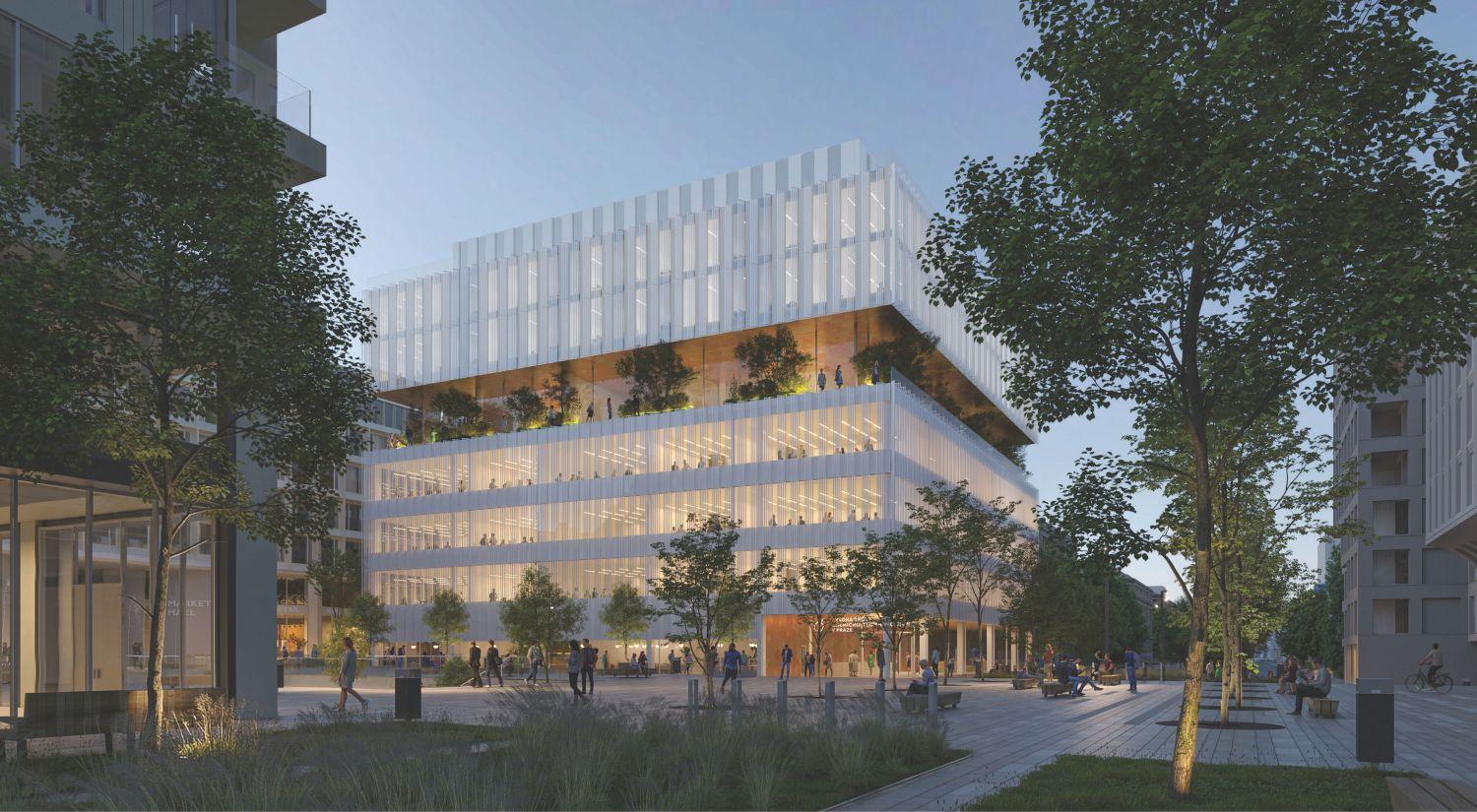
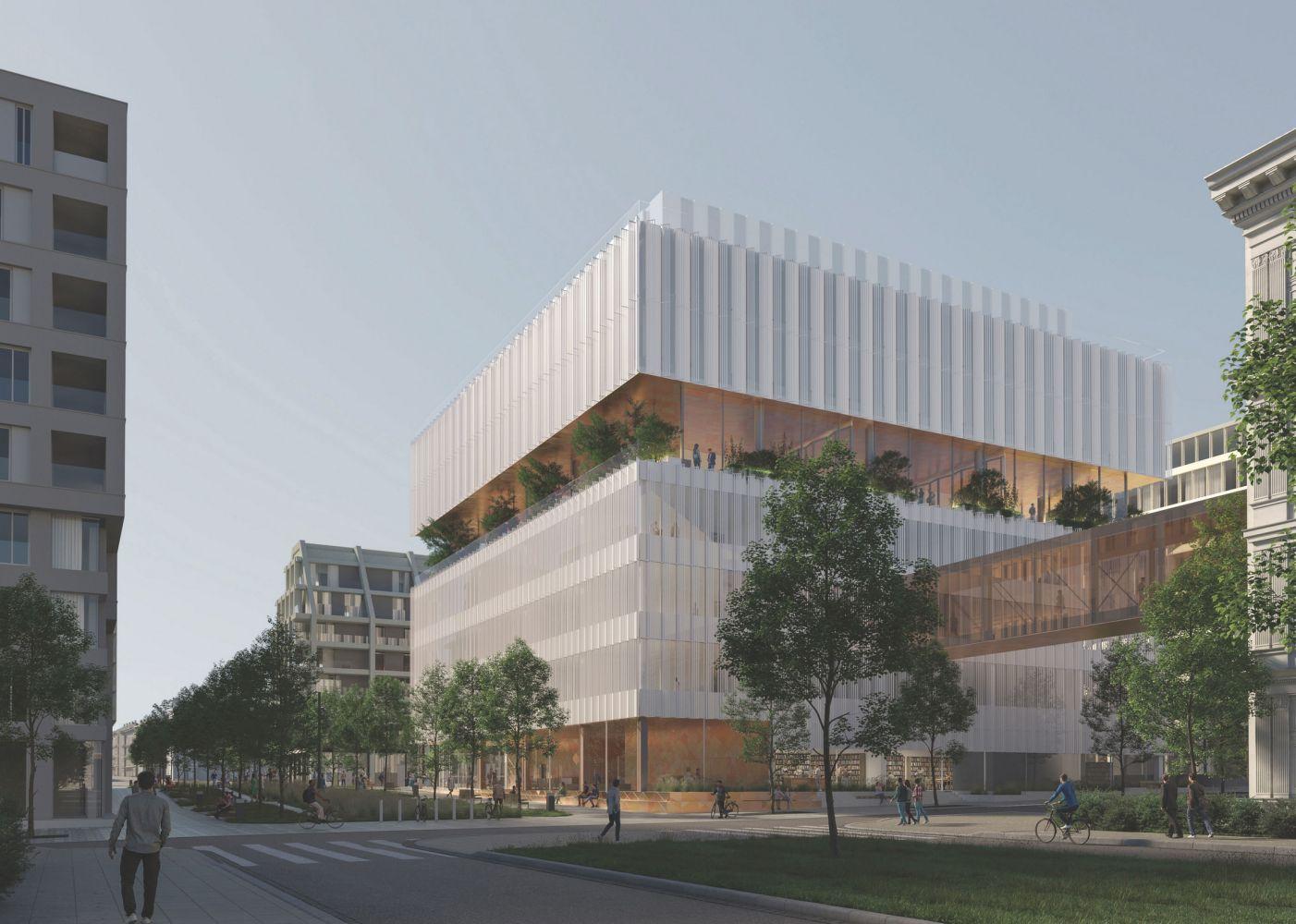
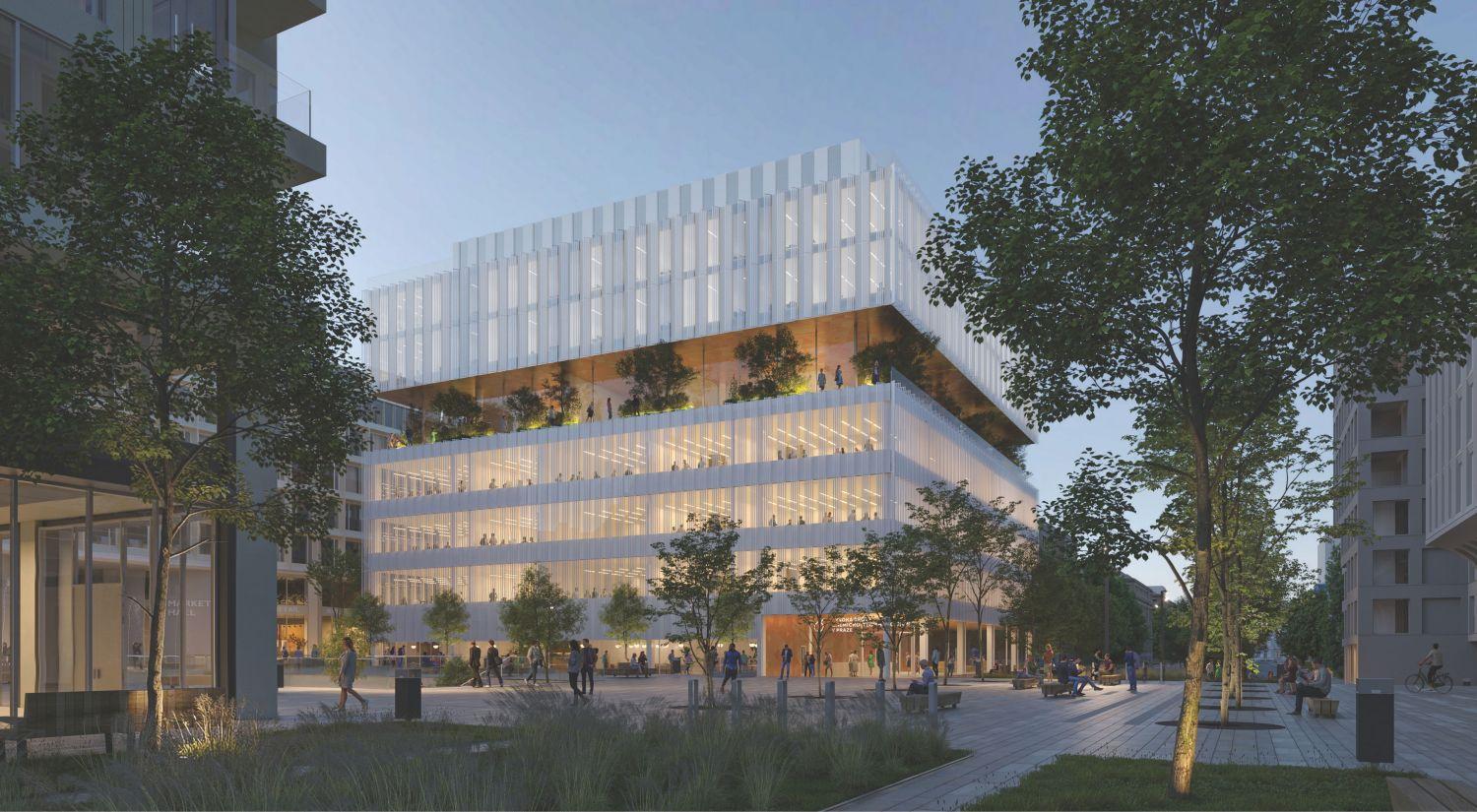
Authors of the winning design were Radek Lampa and Jan Mackovič. The jury particularly appreciated their volumetric approach, which demonstrated a clear and strong architectural statement within the framework of the assigned urban planning regulations, as well as the layout, which fulfilled the required construction program with an expressively strong spatial vision that can be further refined in the future. The building should thus be a dignifying complement to both the planned commercial development and the university campus.
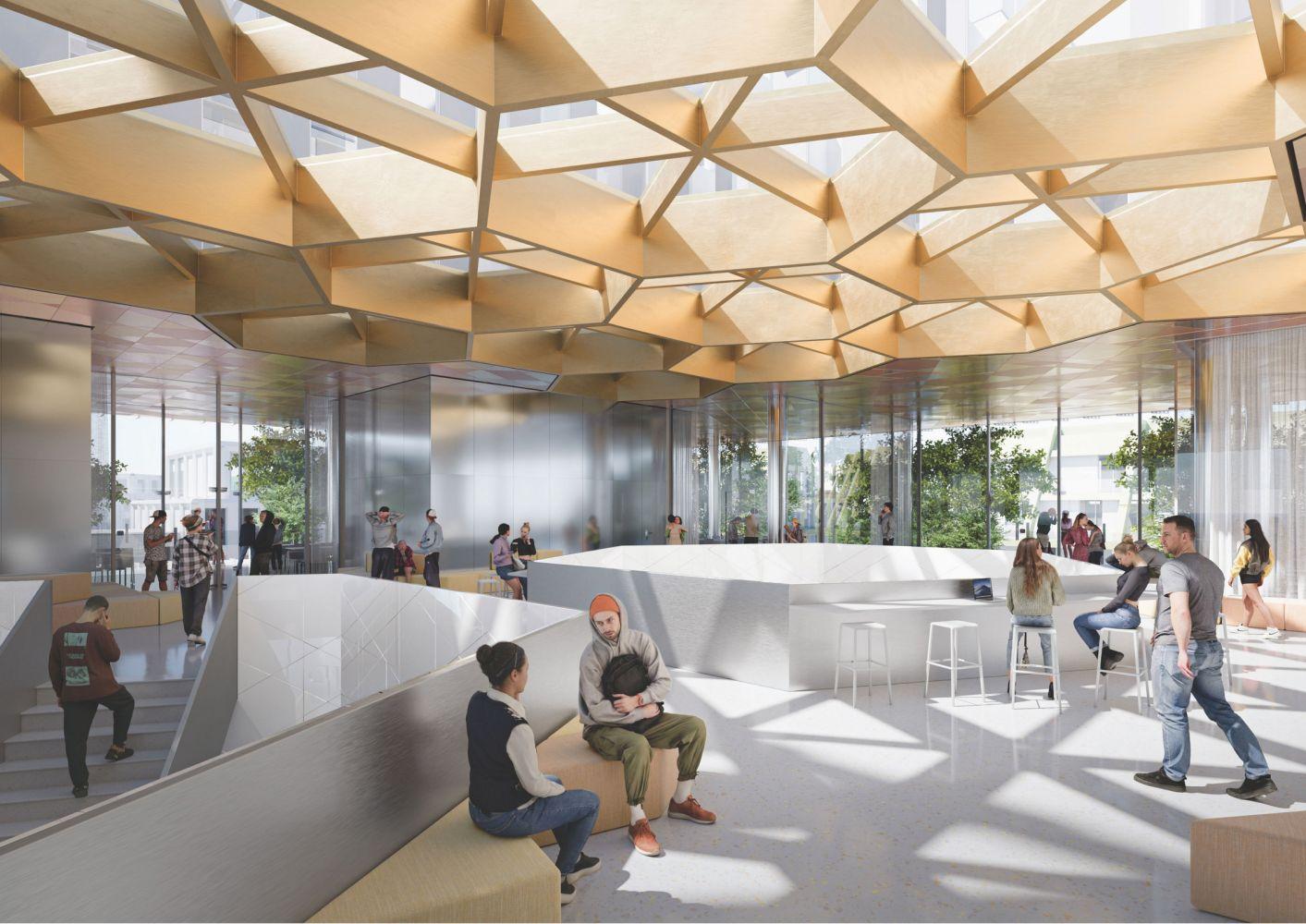
„I am really satisfied with how the competition went and the winning design. I think that our new building will grace Dejvice," UCT Prague’s Rector Milan Pospíšil said. „The main purpose of the new building is to solve the long-term lack of space that hinders UCT Prague’s R&D progress. Specialized laboratories and technological facilities intended for research and classroom teaching will continue to be concentrated in the historical buildings suitable for this purpose and the new building will house UCT Prague’s administrative offices, lecture halls, and smaller classrooms," Rector Pospíšil added.
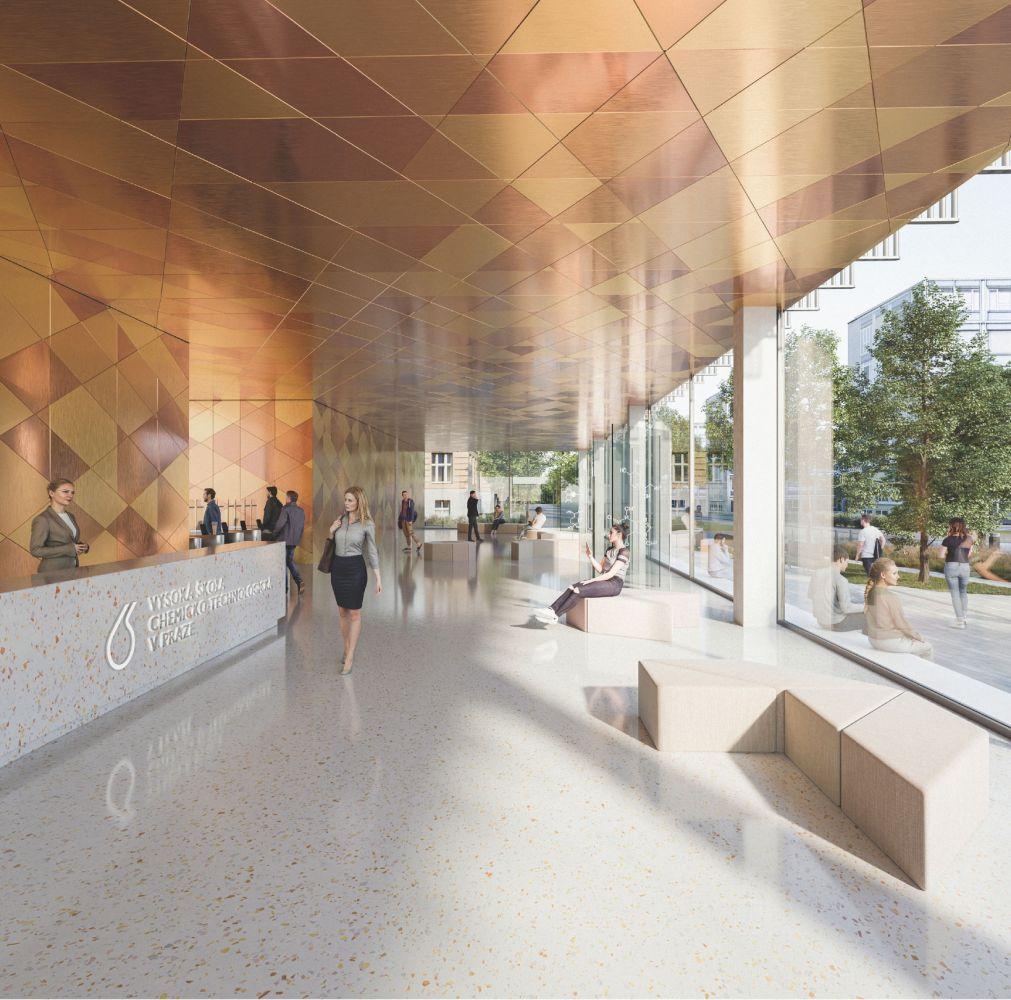
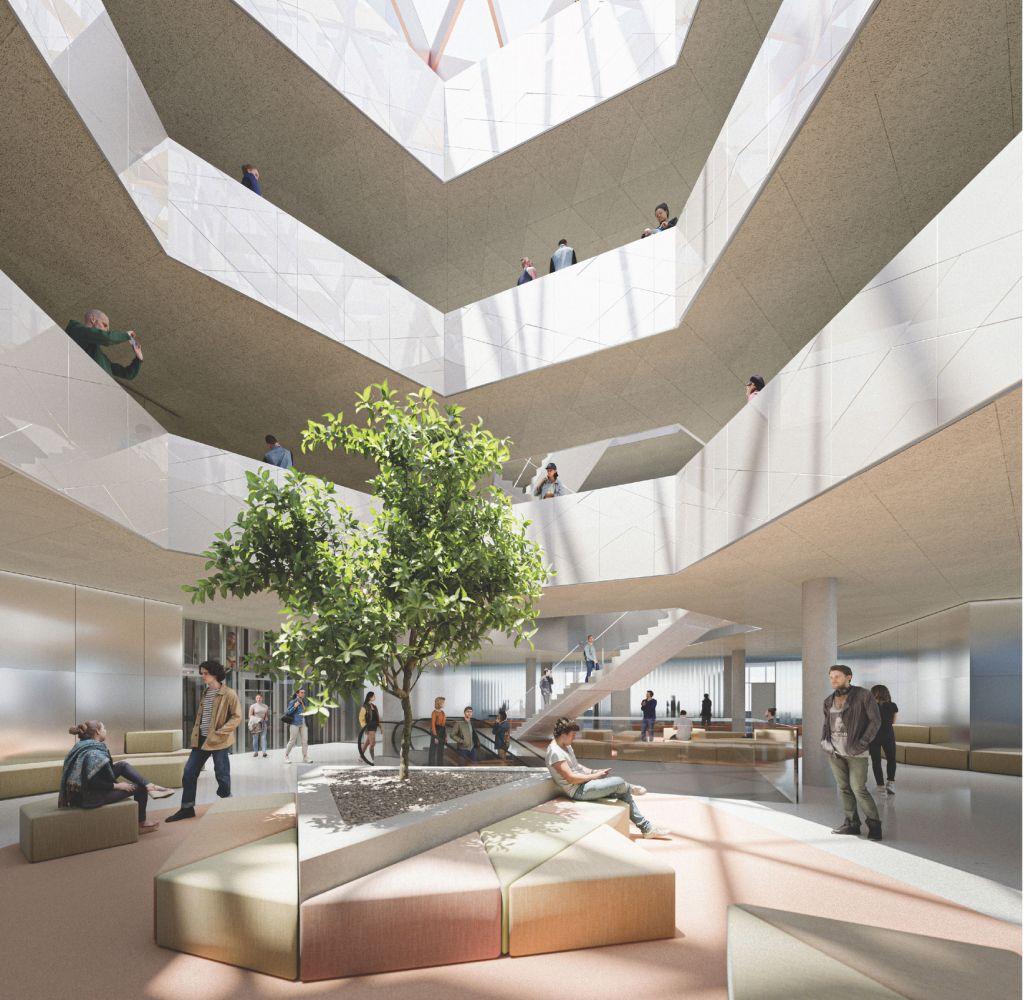
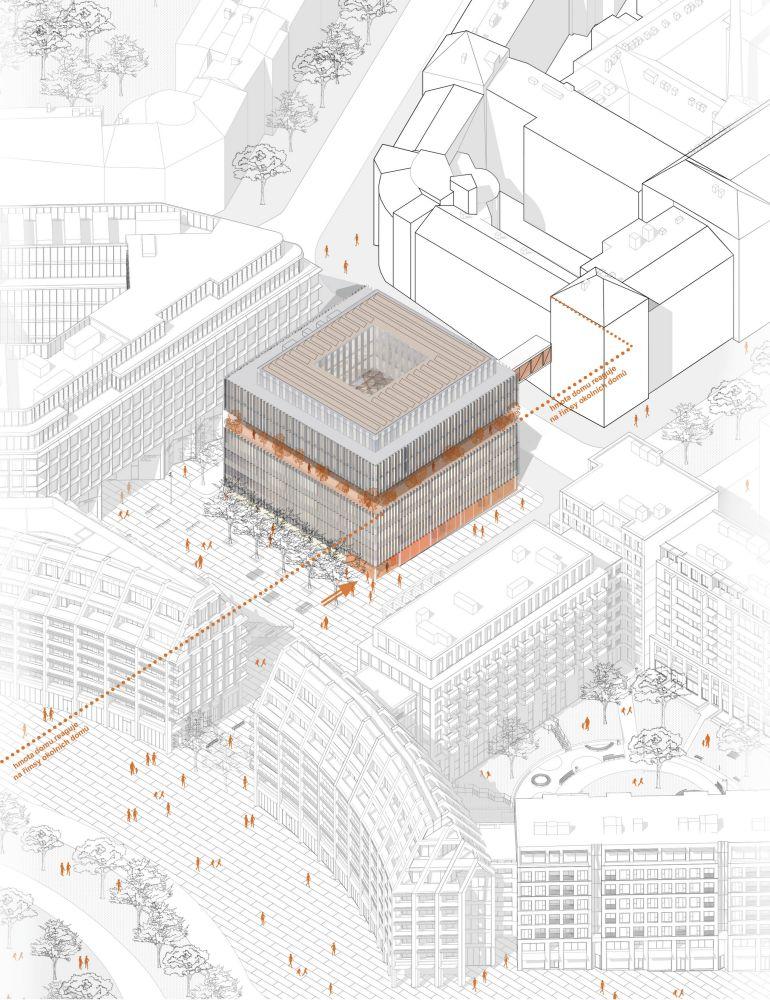
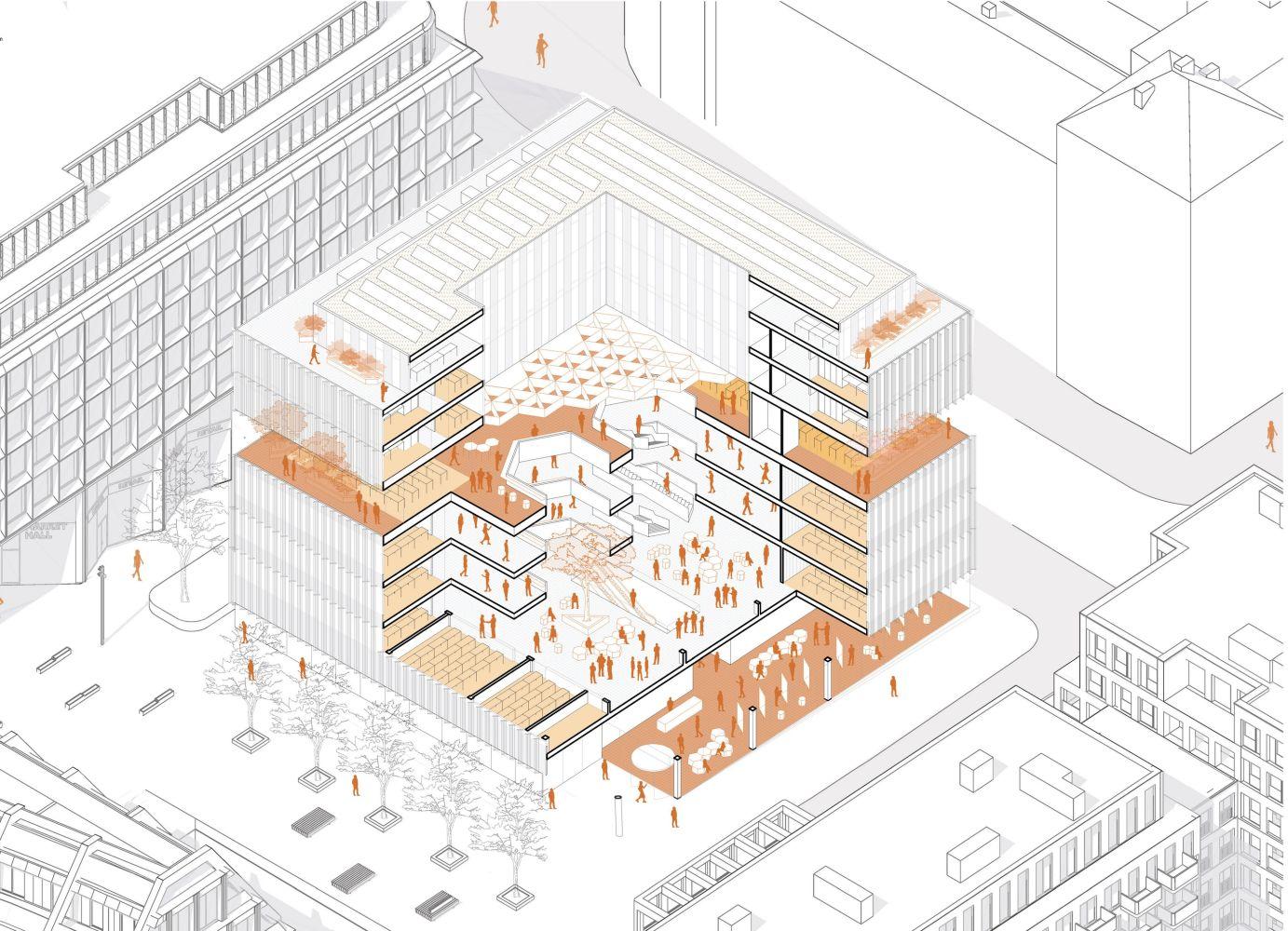
The building, in terms of height, is divided into three parts. These are clearly distinguished in terms of architectural conception as well as construction and layout design. The distinctive cubic volume is made more airy by the suspended concrete floor system (superfloor), which introduces a distinctive element into the expressively modest design. The superfloor will demarcate the teaching floors from the administrative and social parts of the building. The design also exhibits the same qualities on the ground floor. In the context of the site, the building will be a very important element at the entry to the main axis of the entire university campus.
Jury chair Jan Kasl added: „A total of 33 proposals from the Czech Republic and abroad, including Austria, the Netherlands and Spain, were submitted in the competition and were assessed in several evaluation rounds. An architectural competition is perceived by professionals as the best possible way for fulfilling the intentions for a municipal building and is recommended by the Architecture and Building Culture Policy of the Czech Republic. I would like to thank UCT Prague for not being afraid to take this path. It should also become an example for other universities."
The building is part of a broader plan for completing the 4th Quadrant of Victory Square that is currently being designed based on a previous international urban planning competition won by a Czech-Dutch team including Benthem Crouwel Architects and Opočenský Valouch Architekti, Rehwaldt Landscape Architects, PUDIS, and AED. Victory Square, designed from scratch by architect Antonín Engel a hundred years ago, should soon take on a new, definitive form, becoming the vibrant centre of Prague 6.
„UCT Prague‘s new building successfully complements the 4th Quadrant of Victory Square. Thanks to these architectural competitions, the new development will bring apartments, a square, a new cultural centre, and administrative spaces to Dejvice together with a place for research and student activities," said Petr Hlaváček, First Deputy Mayor of the City of Prague for Territorial Development and Urban Planning.
The mayor of Prague 6, Jakub Stárek, emphasized the benefit of the new building for the entire city district. „The requirement that the currently empty 4th Quadrant of Victory Square plot should include public amenities was one of the imperatives for the Prague 6 council. The new UCT Prague building strongly demonstrates that this commitment has been fulfilled. The planned construction of a cultural hub is an additional outcome of Prague 6’s commitment," Stárek said about the results of the competition.
„We appreciate that the winning architectural design sensitively follows the urban concept for the 4th Quadrant, which extends Engel’s original plan, helping to complete Victory Square’s composition. Together with our neighbours, we would like to create a full-fledged urban district with high-quality public spaces, to which the new UCT Prague building will be a worthy centrepiece," expert jury member Pavel Streblov from Penta Real Estate said.
The architectural proposal submitted by Vít Forman, Matěj Štěpánek, Tomáš Korch and Jan Stibral got second place in the UCT Prague competition. Third place went to the proposal submitted by Sadovsky & Architects studio. UCT Prague will now negotiate a contract with the winning participants for the processing of documentation for construction permits.
Competition designs will be exhibited this spring on the Dejvice campus and published on the university's website in the competition catalogue. UCT Prague cooperated with the Czech Chamber of Architects and the CBArchitektura association in preparing the competition. „Both organizations deserve an honorary degree for their approach and expertise," Rector Pospíšil said, evaluating the cooperation.
The University of Chemistry and Technology Prague (UCT Prague) is a natural center of study and cutting-edge research. One of the largest educational and research institutions in Central Europe, it specializes in technical chemistry, chemical and biochemical technologies, material and chemical engineering, food chemistry, and environmental studies. Remarkably, of the more than 4,000 students at the school, 700 are enrolled in PhD programs on average. Some of the study programs on offer at UCT are unique in the Czech Republic and are key to the future of the entire country. The school collaborates with more than 100 academic institutions, namely within Europe but also in the USA, Canada, Japan, Vietnam, and elsewhere.
Contact: Michal Janovský, spokesman, telephone: +420 733 690 543, e-mail: michal.janovsky@vscht.cz